
The rapid expansion of shared micromobility has pushed businesses to build stronger, smarter, and highly scalable digital infrastructures. A well-designed e-scooter application depends on a blend of technical depth, operational intelligence, and user-centric engineering. Any modern platform must integrate stable connectivity, intelligent analytics, and real-time responsiveness to support large, distributed fleets. These systems have become essential as companies explore new cities and navigate rising market expectations. As demand grows, choosing an expert escooter app development company becomes increasingly important for successful deployment.
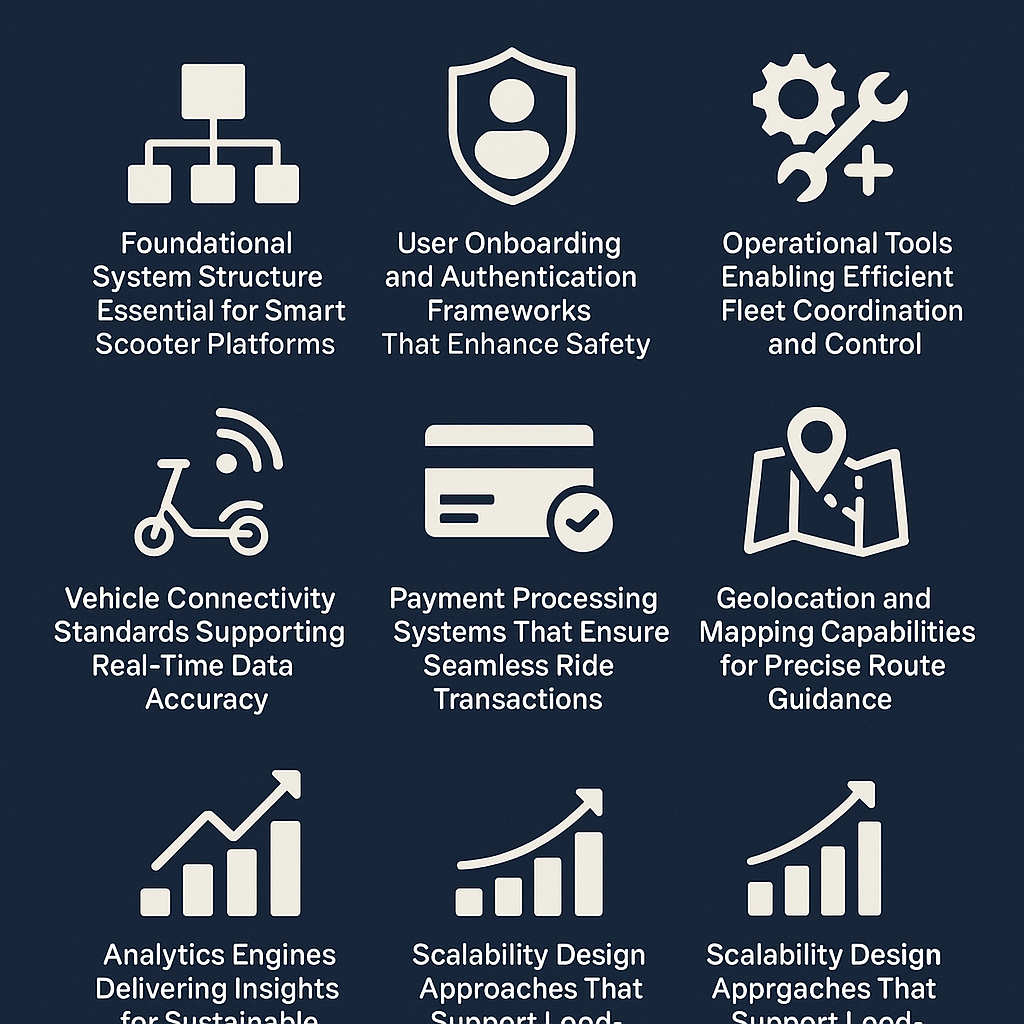
Foundational system structure essential for smart scooter platforms
A reliable e-scooter ecosystem begins with a robust system architecture capable of handling continuous interactions between riders, vehicles, and operators. The core structure must balance scalability, data throughput, and seamless communication across multiple modules. Cloud-native infrastructures are now the standard, providing elasticity and high availability.
Essential components include:
- Microservices for independent feature deployment
- Load balancers to manage fluctuating rider activity
- Real-time communication protocols for vehicle data exchange
- Fault-tolerant servers ensuring uninterrupted platform operations
Strategic planning at this foundational stage also influences long-term costs, interoperability with hardware partners, and ease of integrating future tools such as geofencing or advanced diagnostics.
User onboarding and authentication frameworks that enhance safety
The first user interaction must be simple yet secure. Onboarding sets the tone for trust and overall service usability. Strong identity verification also protects fleets from misuse and supports compliance with regional transportation guidelines.
Important elements include:
- Multi-step registration with ID verification
- Age confirmation workflows
- OTP or biometric authentication
- Optional training modules for first-time riders
To handle these needs efficiently, an escooter app development company must build streamlined interfaces supported by sound backend protocols. Clarity, speed, and transparency significantly improve sign-up completion rates.
Operational tools enabling efficient fleet coordination and control
Fleet management is the backbone of shared mobility operations. Without comprehensive tools for maintenance, deployment, and usage oversight, system efficiency declines. Operators require fine-grained visibility to keep vehicles healthy and accessible.
Key operational features often include:
- Real-time dashboards showing vehicle status
- Maintenance scheduling and automated fault alerts
- Predictive modeling for fleet balancing
- Task assignments for field technicians
- Energy consumption tracking and battery optimization tools
Such capabilities improve operational clarity, reducing downtime and unexpected service interruptions. Intelligent tools also help companies evaluate escooter app development cost based on their functional priorities.
Vehicle connectivity standards supporting real time data accuracy
IoT-enabled scooters rely on uninterrupted connectivity to deliver accurate metrics and instantaneous responses. A well-engineered connection between hardware and backend services enables location tracking, battery updates, lock-unlock actions, and critical alerts.
Core connectivity standards include:
- Secure communication protocols such as MQTT
- Firmware integrations enabling remote updates
- GPS modules with multi-satellite compatibility
- Low-power communication chips preserving battery life
Maintaining consistent data accuracy ensures reliable trip monitoring and fosters trust among riders and city authorities. It also provides the foundation for systems that aim to create an app like bird, where precision and responsiveness are crucial for large-scale deployment.
Payment processing systems that ensure seamless ride transactions
No mobility platform succeeds without a smooth, trustworthy payment mechanism. Riders must be able to initiate and complete trips with ease, using their preferred payment methods without unnecessary delays or failures.
A well-implemented payment structure includes:
- Support for multiple payment channels
- Automated fare calculation based on distance and time
- Wallet options for quicker repeat usage
- Fraud detection and secure tokenization
- Transparent billing records for users and operators
These elements work together to maintain financial accuracy and streamline the rider experience. A secure environment also promotes regulatory compliance and strengthens customer confidence.
Geolocation and mapping capabilities for precise route guidance
Mapping technologies govern several vital functions of e-scooter applications, from unlocking vehicles to guiding riders through safe routes. Precision ensures not only convenience but also regulatory adherence, particularly in cities with designated riding or parking zones.
Core features include:
- Real-time map rendering with dynamic updates
- Geofencing for restricted, slow-speed, or no-parking zones
- Navigation support within the app interface
- Parking validation tools to ensure responsible drop-off behavior
- Trip replay for analysis and incident resolution
Accurate mapping systems help reduce misuse and improve alignment with local authorities. For companies delivering mobile app development solutions, enhancing the mapping stack is a major step toward operational reliability.
Analytics engines delivering insights for sustainable service growth
Comprehensive analytics give operators a clear view of how riders use the service, what operational challenges persist, and where improvements are needed. Scalable analytical tools also support forecasting and planning for new market expansions.
Important analytical outputs include:
- Heatmaps identifying high-demand zones
- Fleet health summaries and predictive maintenance data
- User behavior trends and retention metrics
- Energy usage analysis to improve charging strategies
- Cost-to-revenue performance indicators
With accurate insights, businesses can adjust deployment patterns, optimize workflows, and evaluate opportunities for service enhancement. Intelligent analytics become essential as fleets expand across multiple regions.
Security compliance measures ensuring reliable scooter operations
Security underpins every digital mobility system. As platforms gather sensitive user data, payment details, and vehicle telemetry, strong defensive frameworks are essential. Compliance with regional and international standards further reinforces trust.
Key components include:
- End-to-end data encryption
- Role-based access control across administrative panels
- Secure storage of personally identifiable information
- Protection against spoofing and unauthorized vehicle unlocking
- Regular audits and vulnerability assessments
A well-structured security environment protects both the organization and its users, ensuring long-term stability across all operational layers.
Scalability design approaches that support long term platform use
Long-term success in micromobility relies on the ability to scale across new neighborhoods, cities, and even countries. Scalability must therefore be engineered early in the development process. Modular, cloud-native setups simplify expansions and reduce risks associated with traffic surges or seasonal demand fluctuations.
Effective scalability approaches include:
- Horizontal scaling of core services
- Distributed databases for faster regional access
- Modular architecture enabling feature flexibility
- Automated deployment pipelines
- High-availability configurations preventing system outages
A platform designed for expansion reduces operational strain and preserves performance even with rapidly increasing rider numbers. Such resilience is a hallmark of any advanced escooter app development company focused on future-ready engineering principles.
Conclusion
Building a dependable e-scooter system requires a careful blend of technical precision, operational intelligence, and scalability planning. Each component, from connectivity to analytics, contributes to a seamless rider experience and stable fleet operations. As shared mobility continues to evolve, well-structured digital ecosystems will remain essential for supporting sustainable, efficient, and city-friendly transportation solutions.