
The rapid growth of on demand mobility has reshaped expectations for digital taxi platforms. Riders now seek clarity safety and speed while drivers prioritize earnings control and operational simplicity. A feature rich and transparent taxi app must balance both perspectives without introducing friction or confusion. As competition increases these expectations continue to mature. Understanding what truly matters to both sides helps stakeholders make informed product decisions and design platforms that support trust long term usage and sustainable ecosystem growth across diverse markets and operating models.
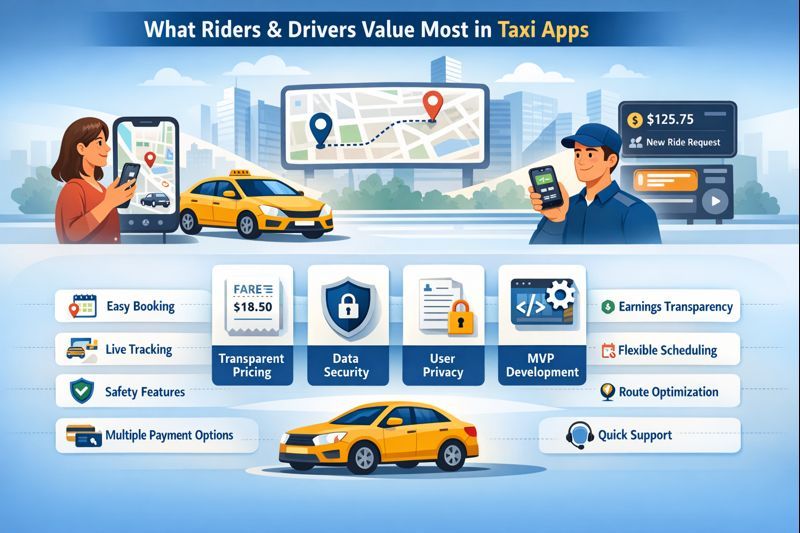
Transparency expectations shaping trust in modern taxi platforms
Transparency is the foundation on which user trust is built in taxi applications. Both riders and drivers rely on clear and consistent information to make confident decisions before during and after a trip. When platforms obscure pricing logic driver allocation or policy enforcement trust erodes quickly.
For riders transparency means knowing exactly what they are paying for and why. Fare breakdowns estimated arrival times and route visibility reduce uncertainty and perceived risk. For drivers it includes clarity around commissions incentives penalties and trip allocation rules. When these elements are visible and predictable drivers feel more in control of their livelihood.
Key transparency elements include
- Real time fare estimates with detailed components
- Clear driver earnings summaries per trip
- Open communication around cancellations and penalties
- Easily accessible policies and support channels
When teams Develop Taxi app solutions with transparency as a core principle the result is reduced disputes improved retention and stronger platform credibility across user groups.
Core rider features that define convenience safety and reliability
Riders judge taxi apps primarily on how easy and safe they feel to use. Convenience begins with intuitive interfaces that minimize steps from booking to pickup. Safety is reinforced through features that provide reassurance throughout the journey.
Reliable performance also plays a major role. Apps that crash miscalculate routes or delay confirmations quickly lose user confidence. Riders expect consistent functionality regardless of location or time.
Commonly valued rider features include
- Accurate pickup and drop location mapping
- Live driver tracking and estimated arrival updates
- Multiple payment options with instant confirmation
- Driver identity visibility including ratings and vehicle details
- Emergency assistance and ride sharing options
These features collectively shape the rider experience. Their absence is often more noticeable than their presence making them non negotiable in mature markets.
Driver focused tools that improve earnings efficiency and control
Drivers engage with taxi platforms as income generating tools. Their priorities center on maximizing productive time minimizing uncertainty and retaining autonomy over work patterns. Applications that respect these needs tend to see higher driver satisfaction and lower churn.
Earnings transparency is critical. Drivers want real time visibility into fares commissions and bonuses. Route optimization and demand heatmaps help drivers position themselves effectively. Flexible scheduling options allow them to balance work with personal obligations.
Important driver focused tools include
- Clear earnings dashboards with daily and weekly summaries
- Intelligent trip allocation based on location and preferences
- In app navigation optimized for traffic conditions
- Simple mechanisms to report issues or disputes
When these tools are thoughtfully integrated drivers perceive the platform as a partner rather than a controller which directly impacts service quality for riders.
Pricing visibility payment clarity and dispute prevention features
Pricing is one of the most sensitive aspects of taxi applications. Lack of clarity here often leads to dissatisfaction disputes and negative reviews. Transparent pricing mechanisms benefit both riders and drivers by aligning expectations before a trip begins.
Riders value upfront fare estimates that remain stable unless conditions change significantly. Drivers appreciate predictable commission structures and clear explanations for fare adjustments. Payment flows must be seamless and verifiable.
Effective pricing and payment features include
- Itemized fare breakdowns visible before and after trips
- Automatic digital receipts with tax details
- Clear explanations for surge or dynamic pricing
- Structured dispute resolution workflows
By addressing pricing transparency at the design stage platforms reduce friction and operational overhead related to conflict management.
Data security compliance and privacy expectations of taxi users
As taxi apps handle sensitive personal and financial data users increasingly scrutinize how that information is protected. Trust extends beyond the ride experience into data stewardship practices.
Riders expect their location payment details and contact information to remain secure. Drivers similarly rely on platforms to safeguard identity documents banking data and performance records. Compliance with regional data protection regulations reinforces credibility.
Core expectations in this area include
- Secure authentication and authorization mechanisms
- Encrypted payment and communication channels
- Clear privacy policies explaining data usage
- User control over data sharing and notifications
Meeting these expectations is not optional. Security failures have long lasting reputational and legal consequences that impact both sides of the marketplace.
Customization scalability and localization in platform architecture
Taxi platforms often operate across diverse regions with varying regulations user behaviors and market dynamics. Flexibility in architecture allows applications to adapt without compromising stability.
Customization enables operators to configure features branding and workflows. Scalability ensures performance during peak demand. Localization supports language currency and regulatory differences. Solutions such as a white label taxi app approach allow faster regional adaptation while maintaining a unified core.
When organizations Develop Taxi app frameworks with modular architecture they can introduce new features or markets efficiently. This adaptability supports long term growth without repeated redevelopment cycles or user disruption.
Balancing development scope timelines and long term product value
Building a taxi platform involves strategic trade offs between speed complexity and sustainability. Overloading early versions with features can delay launch while underdeveloped products risk poor adoption.
Many teams start with MVP app development services to validate assumptions and gather real user feedback. This approach focuses on essential rider and driver features while allowing iterative expansion. Cost considerations also influence scope decisions as taxi app development cost varies based on integrations security and scalability requirements.
A balanced strategy prioritizes
- Core functionality that supports daily operations
- Architecture that accommodates future enhancements
- Realistic timelines aligned with testing and compliance needs
This balance protects long term product value while managing risk and resources responsibly.
Future ready taxi applications driven by feedback and analytics
Sustainable taxi platforms evolve continuously. User expectations change as technology advances and competitors innovate. Data driven decision making helps platforms stay relevant.
Analytics provide insight into rider behavior driver performance and system bottlenecks. Structured feedback mechanisms allow users to voice concerns and suggest improvements. When acted upon transparently these inputs strengthen trust.
Future ready applications emphasize
- Continuous monitoring of usage patterns
- Regular updates informed by measurable outcomes
- Open communication about changes and improvements
Organizations that Develop Taxi app ecosystems with feedback loops embedded are better positioned to adapt proactively rather than reactively.
Conclusion
Successful taxi applications recognize that riders and drivers are equally important stakeholders with distinct yet interconnected needs. Transparency usability and trust form the common ground that supports both experiences. By grounding design decisions in real user expectations and maintaining flexibility for future change platforms can achieve stability and long term relevance. Thoughtful feature selection clear communication and responsible data practices ultimately create environments where participation feels fair predictable and worthwhile for everyone involved.